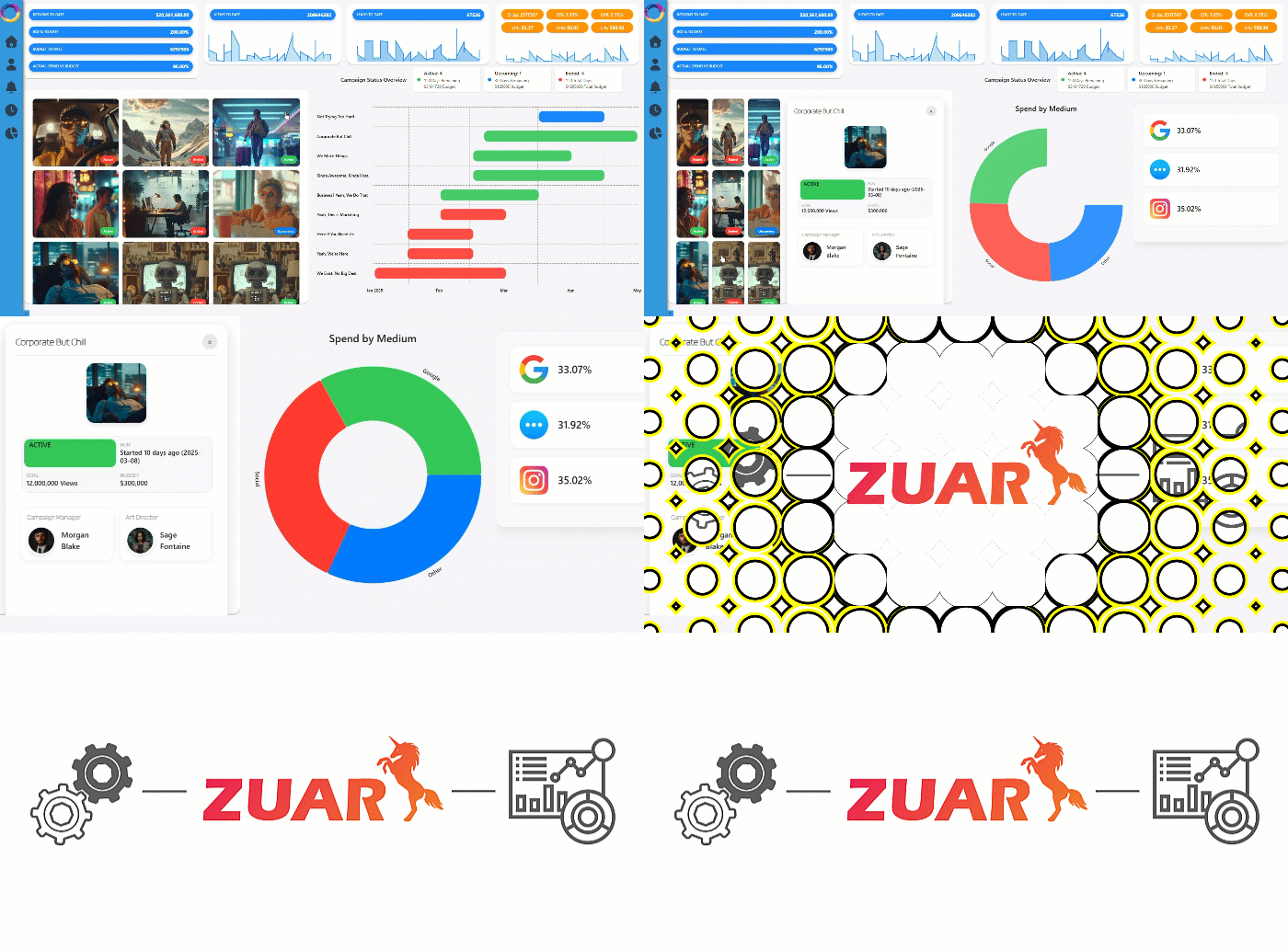
The Rise of the Data Experience Platform (DXP): Why Data Needs a Better Interface
For decades, the "Modern Data Stack" has focused almost entirely on the plumbing. We’ve spent billions of dollars on faster warehouses, more robust ETL pipelines, and complex governance frameworks. But as the infrastructure matured, a new problem emerged: the "Last Mile" gap.

For decades, the "Modern Data Stack" has focused almost entirely on the plumbing. We’ve spent billions of dollars on faster warehouses, more robust ETL pipelines, and complex governance frameworks. But as the infrastructure matured, a new problem emerged: the "Last Mile" gap.
While the data is cleaner and more accessible than ever, the way humans actually interact with it hasn't changed much. Most users are still toggling between static dashboards, messy spreadsheets, and Slack threads asking, "Where did this number come from?"
This is where the Data Experience Platform (DXP) comes in. It represents a shift from focusing on how data is stored to how data is consumed and acted upon.
What Exactly is a Data Experience Platform?
A Data Experience Platform is a unified layer that sits on top of your data warehouse to provide a seamless, interactive, and intuitive interface for all users—not just data scientists. Unlike traditional Business Intelligence (BI) tools that simply visualize data, a DXP is designed to create a cohesive "experience" around data.
It integrates several key functions into one environment:
- Self-Service Exploration: Allowing non-technical users to ask complex questions using natural language or intuitive UI components without writing SQL.
- Embedded Analytics: Bringing data directly into the workflows where people already work, rather than forcing them to visit a separate "dashboard graveyard."
- Collaboration and Context: Enabling teams to discuss, annotate, and share insights within the data environment itself, preserving the "why" behind the numbers.
- Actionability: Moving beyond "looking at charts" to "triggering actions." A DXP often allows users to push data back into operational tools (like CRMs or marketing automation) directly from the interface.
Why Traditional BI is No Longer Enough
Traditional BI tools were built for a world where data was scarce and reports were delivered weekly. In today’s world, data is real-time and ubiquitous. The old model of "request a report → wait three days → get a static PDF" is a bottleneck to growth.
The DXP solves the three biggest pain points of traditional BI:
- The Context Gap: In a DXP, documentation and metadata are baked into the experience. You don't just see a "Churn Rate" metric; you see how it’s calculated and who owns it.
- The Friction Gap: By using AI-driven interfaces and "vibe coding" principles, DXPs lower the barrier to entry, making data feel like a conversation rather than a chore.
- The Silo Gap: Instead of having separate tools for cataloging, visualizing, and alerting, a DXP harmonizes these into a single journey.
The Core Pillars of a Great Data Experience
If you are looking to implement or build a data experience, look for these three pillars:
1. Personalization
A CFO needs a different "experience" than a Product Manager. A DXP tailors the interface, the level of detail, and the suggested insights based on the user’s role and past behavior.
2. Interactivity
Static charts are dead. A true DXP allows users to drill down, pivot, and simulate "what-if" scenarios on the fly. It treats data as a living entity, not a snapshot in time.
3. AI-First Design
With the advent of Large Language Models (LLMs), the DXP can act as an intelligent agent. It can proactively alert you to anomalies, summarize trends in plain English, and even suggest the next business move based on the data it sees.
The Bottom Line
The goal of a Data Experience Platform isn't just to show you the data—it's to make you feel the data. It’s about turning "data-driven" from a corporate buzzword into a daily reality where every employee feels empowered to explore, understand, and act.
As we move further into 2026, the companies that win won't be the ones with the biggest data warehouses; they’ll be the ones that provide the best experience for the people using them.
 Team Zuar
 Team Zuar